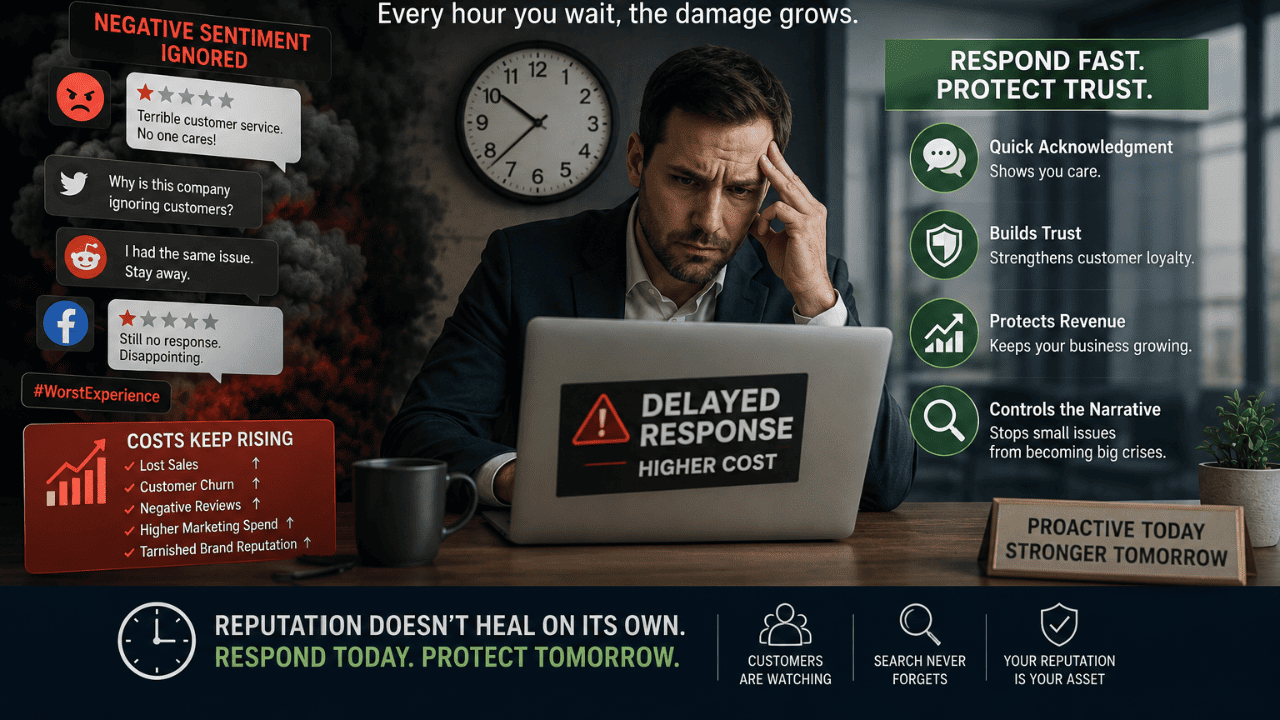


June 9, 2026
June 9, 2026
As search experiences become increasingly influenced by AI-generated summaries and recommendation systems, businesses are looking for new ways to improve brand sentiment and AI search SEO strategies beyond traditional optimization techniques. While rankings, backlinks, and content relevance remain important, they are no longer the only factors influencing visibility.
Read StoryJune 9, 2026

As search systems become increasingly focused on understanding entities rather than keywords alone, the most important schema markup for AI search visibility is no longer limited to technical enhancements or rich search features. Modern search environments increasingly rely on structured data to understand businesses, connect relationships, and build confidence around entities.
Read StoryJune 9, 2026

As search engines become increasingly sophisticated, online reputation management is evolving beyond reviews, ratings, and brand perception. Modern search systems are now evaluating how structured information, trust signals, and entity relationships work together to determine whether a business deserves visibility.
Read StoryJune 8, 2026

For years, structured data has been viewed primarily as a technical SEO tool. Organizations implemented schema markup to help search engines understand webpages, improve rich result eligibility, and enhance search visibility. While these benefits remain relevant, the emergence of generative AI search is changing the strategic role of structured data.
Read StoryJune 8, 2026

For years, online reputation management has revolved around a familiar set of metrics: star ratings, customer reviews, and search rankings. Businesses focused on generating positive feedback, responding to complaints, and ensuring favorable content appeared prominently in search results. While these efforts remain important, the rise of AI-powered search is fundamentally changing how we evaluate reputation.
Read StoryJune 8, 2026

The rise of AI-powered search is changing how people discover, evaluate, and trust businesses. Traditionally, users would browse multiple search results, compare sources, and form their opinions. Today, AI systems increasingly act as intermediaries, summarizing information and presenting conclusions before users ever visit a website.
Read StoryJune 8, 2026

For decades, online reputation management focused on a relatively straightforward challenge: addressing negative search results, improving brand visibility, and ensuring positive content ranked prominently on traditional search engines. Today, however, the rise of AI-powered search systems has introduced a new dynamic. In many cases, ORM is no longer just about what appears in search results; it is about what artificial intelligence systems remember, retrieve, and repeat.
Read StoryJune 5, 2026
June 5, 2026

For decades, reputation crises primarily unfolded through news cycles, social media discussions, customer reviews, and search results. While these channels could significantly impact public perception, users often had to actively seek out information and evaluate multiple sources before forming conclusions.
Read StoryJune 4, 2026

The rise of generative search is transforming one of the most fundamental principles of digital visibility: trust.
Read StoryJune 3, 2026

In today’s hyper-connected world, the effectiveness of traditional advertising is under pressure. Businesses, especially small and medium-sized enterprises, are increasingly questioning the return on investment from banner ads, pay-per-click campaigns, and interruptive social media promotions.
Read StoryJune 3, 2026

In the digital age, a single negative review can feel disproportionately damaging. A business that has spent years building its reputation can suddenly find itself judged through the lens of one dissatisfied customer, often amplified across platforms where visibility is immediate and permanent. But the real question isn’t whether negative feedback will appear; it’s why some brands are forgiven while others are not, even when the mistake itself appears similar on the surface.
Read StoryJune 3, 2026

Many businesses approach customer acquisition costs (CAC) as a marketing efficiency problem. They focus on optimizing ad campaigns, refining audience targeting, and improving conversion rates in an effort to bring costs down. While these efforts matter, they often overlook a factor that influences acquisition costs long before a prospect clicks an ad or fills out a form: reputation.
Read StoryJune 2, 2026

AI-driven search systems are changing how people understand brands online. Traditionally, businesses had significant control over their digital identity through websites, marketing campaigns, brand messaging, and owned content. While external opinions always mattered, brands could largely shape how they presented themselves to potential customers.
Read StoryJune 2, 2026

AI-driven search systems are changing how digital reputation is interpreted online. Businesses are no longer evaluated through one centralized search environment or one dominant public narrative. Instead, AI systems increasingly gather information from multiple platforms simultaneously, including reviews, forums, news articles, social media discussions, business directories, videos, and AI-generated summaries.
Read StoryJune 2, 2026

As digital discovery becomes increasingly shaped by trust signals, enterprise brands face a challenge that extends beyond rankings and reviews. Effective online reputation management now requires understanding how authority and sentiment combine to influence how organizations are perceived across the broader digital ecosystem.
Read StoryJune 2, 2026
.png)
As AI-driven search systems become more sophisticated, they are increasingly moving beyond traditional ranking factors and toward deeper evaluations of trust, credibility, and authority. Modern search environments do not simply attempt to determine whether information is relevant. They also attempt to determine whether the source of that information appears trustworthy.
Read StoryJune 1, 2026

AI-driven search systems are changing how businesses recognize, interpret, and recall themselves online. Traditional search engines primarily focused on matching keywords to webpages. Modern generative search systems increasingly attempt to build long-term contextual understanding about companies, industries, expertise areas, and reputation signals.
Read StoryJune 1, 2026

AI-driven search systems are fundamentally changing how digital credibility is established online. Traditional search engines largely evaluated websites through rankings, backlinks, and keyword relevance. Modern AI-driven discovery systems increasingly evaluate whether a brand demonstrates consistent credibility across the broader digital ecosystem.
Read StoryJune 1, 2026

AI-driven search systems are changing how brands are understood online. Modern search engines no longer evaluate businesses solely through keywords, backlinks, or webpage relevance. Increasingly, AI systems attempt to understand what a brand is associated with, how consistently those associations appear across the web, and whether those associations reinforce trust.
Read StoryMay 29, 2026
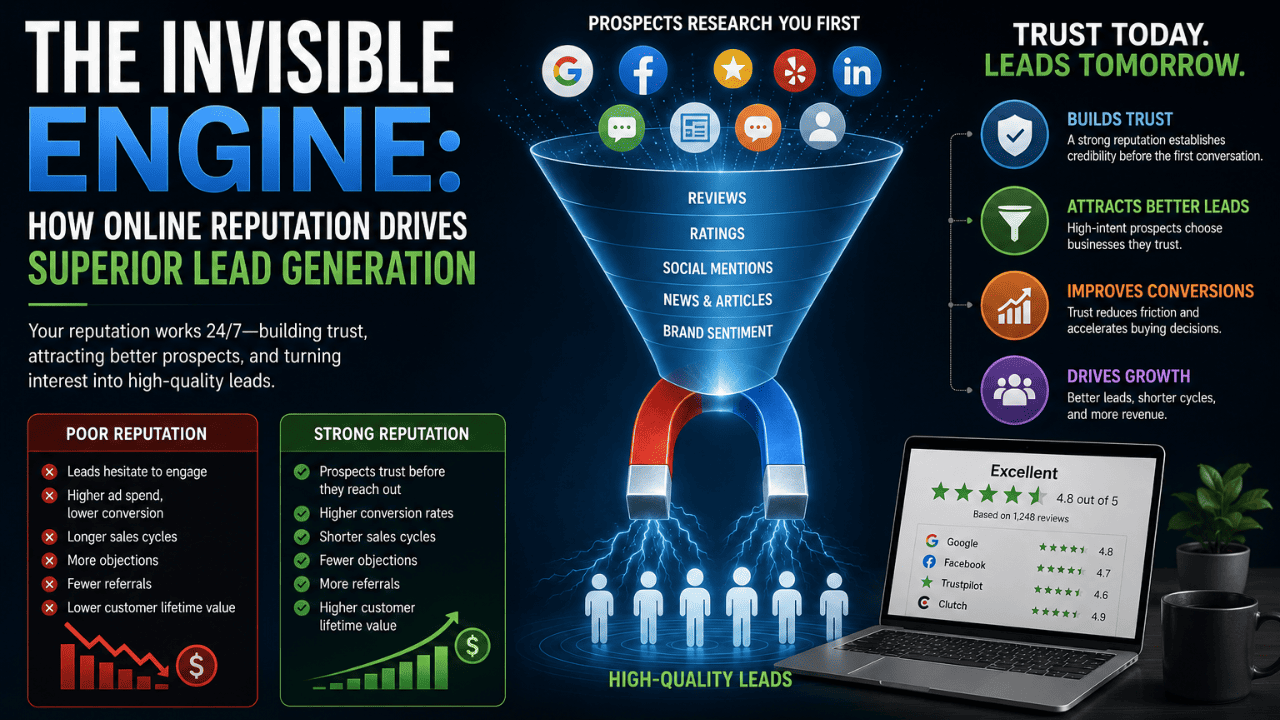
Most businesses believe lead generation is a visibility problem. When leads slow down, they invest in SEO, increase advertising budgets, launch new campaigns, publish more content, or experiment with additional acquisition channels. The assumption is simple: more visibility creates more opportunities. While visibility certainly matters, it is only half of the equation.
Read StoryMay 29, 2026
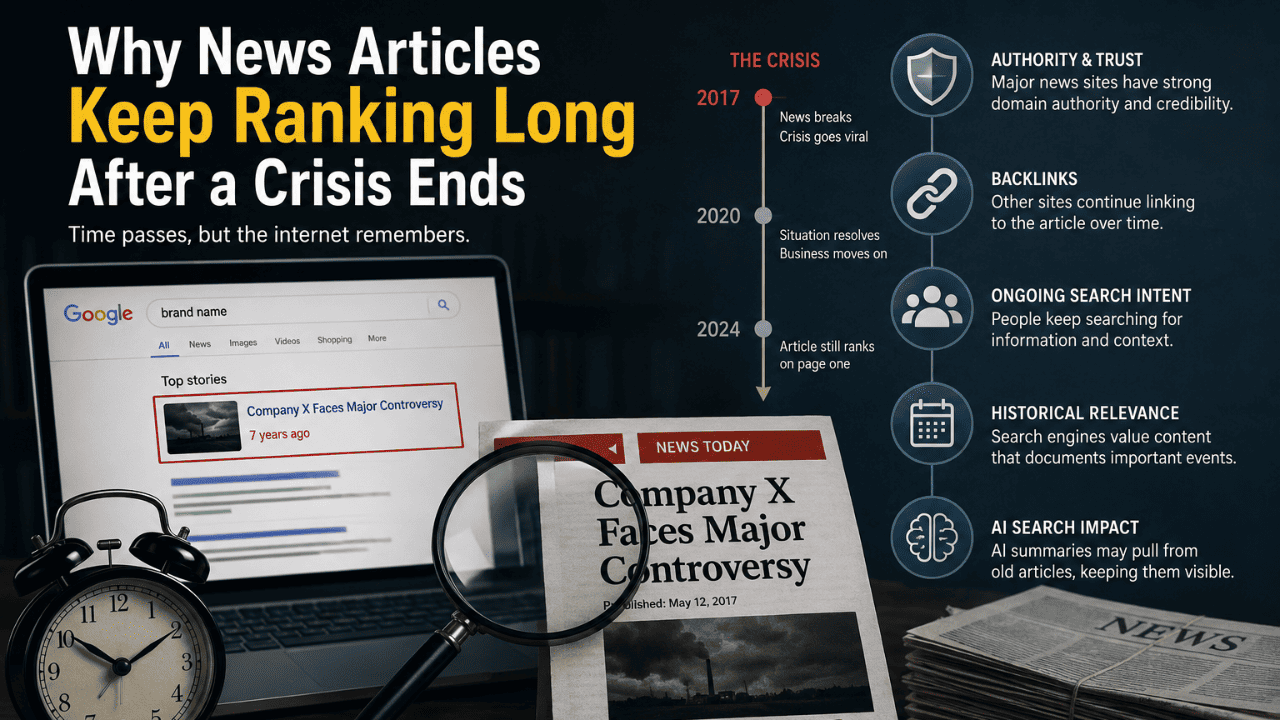
A company experiences a public controversy. News outlets cover the story extensively, social media amplifies the discussion, customers react, and industry commentators weigh in with their opinions. Over time, the situation is resolved. Leadership changes. Internal processes improve. The business evolves and moves forward. Yet years later, when someone searches for the company on Google, the same crisis-related articles continue appearing prominently in search results. For many organizations, this becomes one of the most frustrating realities of modern online reputation management. The crisis may be over, but the visibility of that crisis often remains.
Read StoryMay 29, 2026

Most businesses fear the moment their brand becomes the center of negative attention online. A controversial campaign, a customer complaint that gains traction, an executive misstep, or a poorly handled situation can spread across social media within hours, reaching millions of people before internal teams have even fully assessed the situation. While the immediate backlash often feels overwhelming, the viral moment itself is rarely what causes the most long-term damage. What determines whether a business recovers or struggles for years afterward is how effectively it manages the loss of trust that follows. This is why modern brand reputation management has become one of the most important investments organizations can make in today's digital landscape.
Read StoryMay 28, 2026
May 28, 2026

A modern reputation management agency increasingly understands that consumers now trust authentic user evidence more than polished brand statements across digital environments.
Read Story
 Company