


Ken Wisnefski, May 29, 2026
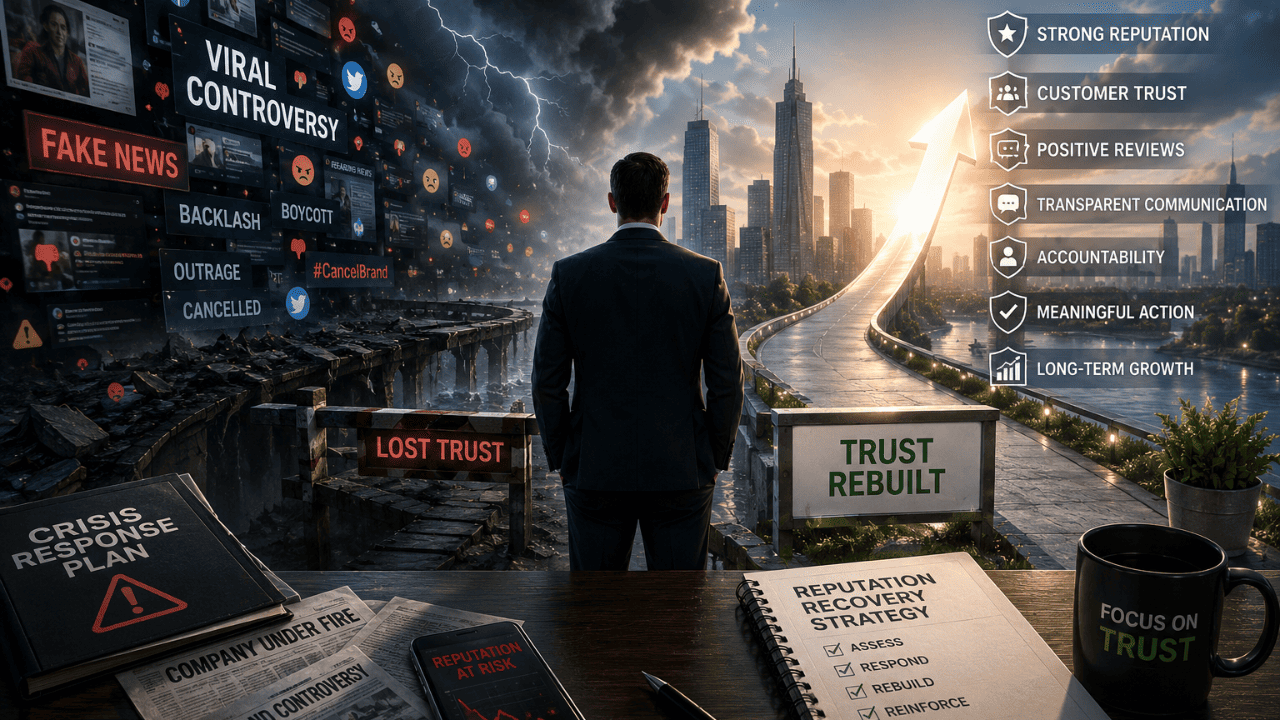
Most businesses fear the moment their brand becomes the center of negative attention online. A controversial campaign, a customer complaint that gains traction, an executive misstep, or a poorly handled situation can spread across social media within hours, reaching millions of people before internal teams have even fully assessed the situation. While the immediate backlash often feels overwhelming, the viral moment itself is rarely what causes the most long-term damage. What determines whether a business recovers or struggles for years afterward is how effectively it manages the loss of trust that follows. This is why modern brand reputation management has become one of the most important investments organizations can make in today's digital landscape.
Many companies mistakenly view a viral controversy as a temporary public relations problem. In reality, it is often the beginning of a much larger trust challenge. The headlines may fade, social media may move on, and public attention may shift elsewhere, but the digital footprint remains. Search results, reviews, news articles, social conversations, and AI-generated summaries continue shaping public perception long after the initial incident disappears from the news cycle. Effective brand reputation management is no longer just about responding to crises. It is about controlling how a brand is perceived long after the crisis itself has passed.
The Viral Moment Is Rarely the Real Problem
When negative publicity strikes, businesses naturally focus on controlling the immediate fallout. Leadership teams worry about media coverage, social media sentiment, customer complaints, and potential revenue impact. While those concerns are valid, consumers often evaluate situations differently than brands expect.
Most people understand that mistakes happen. What they pay attention to is how companies respond when those mistakes become public.
This is why two businesses can experience similar controversies and see completely different outcomes. One brand recovers, rebuilds trust, and eventually strengthens its reputation. Another spends years fighting negative perception. The difference often comes down to whether the company demonstrates accountability, transparency, and genuine action after the incident occurs.
Consumers pay close attention to several factors:
- Whether the company accepts responsibility
- Whether leadership communicates openly
- Whether corrective action is visible
- Whether customer concerns are acknowledged
- Whether the response feels authentic rather than scripted
This is where brand reputation management becomes critical. The incident itself may trigger public attention, but the response determines whether that attention evolves into long-term trust erosion or eventual recovery.
Why Negative Virality Spreads Faster Than Positive Publicity
One reason reputation crises feel so destructive is because negative content spreads differently than positive content. People are naturally drawn toward stories involving controversy, conflict, outrage, and public mistakes. Social media algorithms amplify engagement, and few things generate engagement faster than criticism.
As a result, a single incident can quickly evolve into hundreds of articles, thousands of comments, countless social media posts, and ongoing public discussion. The narrative often expands beyond the original event and begins influencing how people perceive the organization itself.
This creates a major challenge for brand reputation management because public conversations rarely remain focused on the facts alone. Instead, audiences begin making broader judgments about company culture, leadership, values, customer service, and trustworthiness.
The longer those narratives go unchallenged, the more difficult they become to reverse.
Many businesses make the mistake of trying to defend themselves immediately. In reality, rebuilding trust is often more effective than winning arguments. Customers are generally willing to forgive mistakes when they see accountability. They are far less forgiving when they see defensiveness.
The First 72 Hours Often Shape the Entire Narrative
The first few days following a reputational crisis are often the most important. During this period, customers, media outlets, employees, investors, and partners are all trying to understand what happened and how the company intends to respond.
Unfortunately, many organizations make predictable mistakes during this window. They delay communication while legal teams review statements. They release generic responses that avoid responsibility. They focus on protecting the business instead of addressing customer concerns.
These approaches almost always make situations worse.
Several common mistakes repeatedly undermine brand reputation management efforts:
- Delayed responses that allow speculation to grow
- Generic corporate statements lacking accountability
- Defensive language that shifts blame elsewhere
- Lack of executive visibility during the crisis
- Overly legal responses that feel impersonal
- Failure to communicate corrective actions clearly
Silence creates a vacuum, and the internet rarely leaves a vacuum empty. When brands fail to communicate effectively, external voices take control of the narrative. Once that happens, rebuilding trust becomes significantly more difficult.
Strong brand reputation management requires organizations to respond quickly, communicate honestly, and demonstrate that they understand the seriousness of the situation.
What Happens After the Headlines Disappear
Many businesses assume the crisis ends when media coverage slows down. Unfortunately, that is often when the long-term challenge begins.
The internet has an extraordinarily long memory. Months or even years after a controversy occurs, potential customers may still encounter:
- News coverage about the incident
- Negative reviews
- Reddit discussions
- Forum conversations
- Social media screenshots
- YouTube commentary
- Search engine results related to the controversy
This is why brand reputation management extends far beyond public relations. The goal is not simply to survive a news cycle. The goal is to influence the information people discover when researching the brand in the future.
A prospective customer may never see the company's official apology or crisis response. Instead, they may only encounter negative articles appearing in search results. They may find critical reviews or discussions that continue shaping their perception long after the incident itself has been resolved.
This is why managing negative search results often becomes one of the most important aspects of long-term recovery. If the first page of search results reinforces negative perceptions, trust becomes significantly harder to rebuild.
The Hidden Costs Most Businesses Never Calculate
Most organizations focus on the obvious financial impact of a crisis. They calculate lost sales, declining traffic, or reduced customer acquisition. However, some of the most damaging consequences are far less visible.
A damaged reputation affects nearly every area of a business.
It can influence:
- Customer trust
- Conversion rates
- Lead generation
- Recruiting efforts
- Employee retention
- Partnership opportunities
- Investor confidence
- Brand perception
Trust directly affects business performance. When consumers become uncertain about a company, they spend more time researching alternatives, comparing competitors, and looking for reassurance before making purchasing decisions. Sales cycles become longer, conversion rates decline, and customer acquisition costs often increase.
This is why brand reputation management should never be viewed solely as a marketing initiative. It is a growth strategy. Every trust signal influences revenue, and every credibility signal affects customer behavior.
Why Most Crisis Responses Fail
One of the biggest reasons businesses struggle to recover from negative publicity is because they approach crises as image problems rather than trust problems.
Their goal becomes making people forget. The problem is that customers rarely forget.
Instead of focusing on image preservation, successful brand reputation management focuses on trust restoration. Customers want evidence that the company understands what happened, accepts responsibility, and is taking meaningful action to prevent similar issues in the future.
The strongest recovery efforts typically include:
- Visible accountability
- Transparent communication
- Corrective action
- Ongoing updates
- Consistent follow-through
People often forgive mistakes. What they struggle to forgive is insincerity. When businesses prioritize optics over action, customers recognize the difference quickly.
Brand Reputation Management Is Not the Same as Crisis Management
Many organizations use these terms interchangeably, but they represent two very different disciplines. Crisis management focuses on the immediate response.
Brand reputation management focuses on everything that happens afterward.
Crisis management asks how the company can contain the damage. Brand reputation management asks how the company can rebuild trust over time.
That distinction matters because trust recovery is rarely measured in days or weeks. It often requires months or years of consistent effort.
Organizations rebuilding their reputation must continuously strengthen:
- Positive brand visibility
- Search presence
- Review sentiment
- Customer trust
- Industry authority
- Media coverage
- Online credibility
This is where strategic brand reputation management becomes essential. The work does not end when the headlines disappear. In many cases, that is when the real work begins.
AI Search Is Making Reputation Recovery More Challenging
The rise of AI-powered search introduces an entirely new challenge for businesses recovering from reputational damage. Traditional search engines primarily displayed links. Modern AI systems increasingly summarize information, identify patterns, and generate answers based on content found across the web.
This means negative coverage can have a longer-lasting impact than ever before.
If search engines consistently encounter negative brand associations, those associations may influence AI-generated responses, summaries, and recommendations. As AI search becomes more common, proactive brand reputation management becomes even more important.
Brands must actively strengthen:
- Positive media coverage
- Authority signals
- Customer reviews
- Brand mentions
- Trust indicators
- Search visibility
because search systems are increasingly evaluating overall reputation rather than individual webpages.
The Brands That Recover Best Focus on Trust, Not Attention
The organizations that recover most successfully after negative virality share one important characteristic. They stop focusing exclusively on the crisis itself and start focusing on rebuilding trust. They invest in transparency, accountability, customer experience, authority building, and positive brand visibility. They understand that trust is rebuilt through consistent actions, not one-time statements.
This is why strong online reputation management often becomes one of the most valuable investments a business can make after a crisis. Trust is earned through repetition. Every positive customer experience, every authentic interaction, and every demonstration of accountability contributes to reshaping public perception over time.
The strongest brands do not simply recover from reputational damage. They create enough positive experiences that customers eventually associate them with something entirely different.
The Internet Remembers, But Customers Can Still Forgive
Many businesses assume a viral controversy permanently defines their future. In reality, long-term outcomes are rarely determined by whether the internet remembers what happened. They are determined by whether the company demonstrates meaningful change, rebuilds trust consistently, and gives customers a reason to reassess their perception of the brand.
The strongest examples of brand reputation management are not stories about avoiding mistakes altogether. They are stories about organizations that responded to adversity with transparency, accountability, and sustained action, ultimately rebuilding trust over time.
In today's digital landscape, every brand is vulnerable to public scrutiny. The companies that survive are not the ones that never face a crisis. They are the ones that understand how to earn trust back when it matters most.