


Ken Wisnefski, March 23, 2026
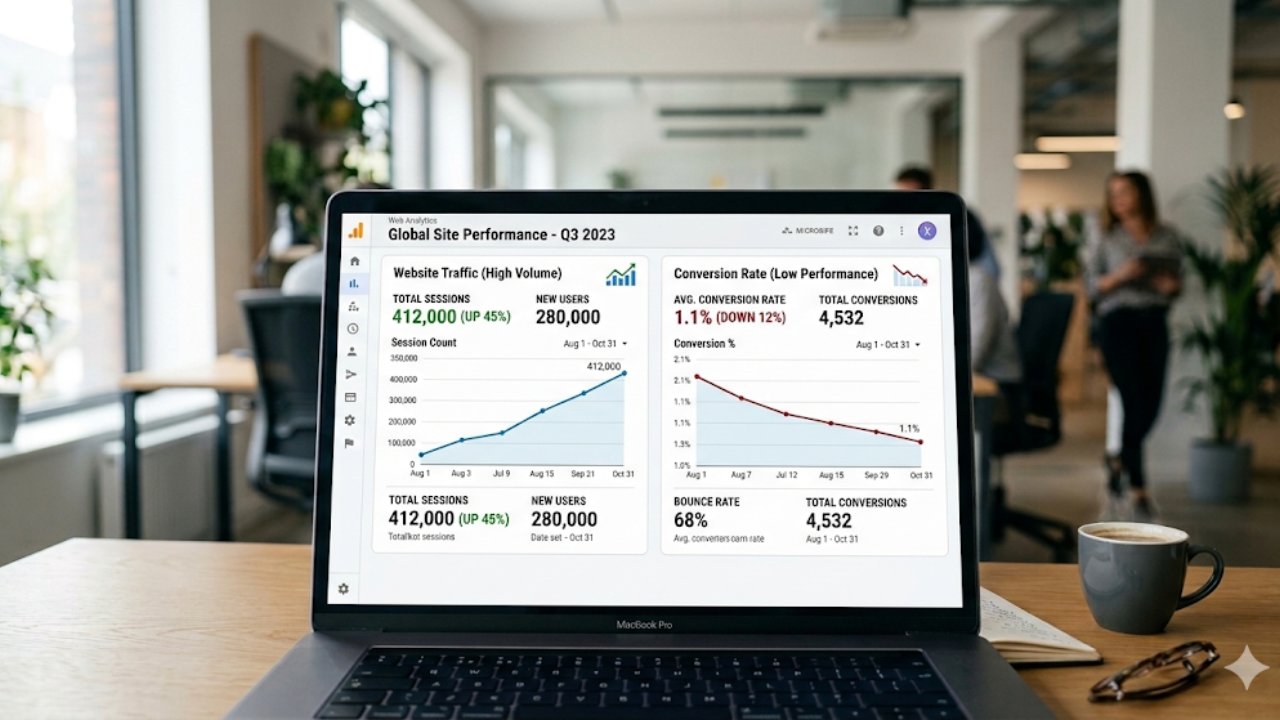
At first, the assumption is that something is missing at the top of the funnel. Maybe more content is needed, better keywords, or more reach. But over time, a different pattern begins to emerge. The issue isn’t attracting users. It’s what happens after they arrive.
This becomes especially clear when you examine why high-traffic pages fail to convert. Visibility creates opportunity, but it does not guarantee movement. The real challenge lies in turning that attention into action. That’s why a proper SEO helps in converting the traffic.
Direct Answer: Why Content Doesn’t Convert
Content fails to convert when it delivers information without direction. Users may understand what they’re reading, but if the content doesn’t help them decide, they leave without taking action.
The Real Problem: Content Stops at Understanding
Most content strategies are built around one goal, getting found. This naturally leads to content that explains, educates, and answers questions. It performs well in search because it aligns with what users are asking. But understanding is not the same as decision-making.
A user can fully understand a topic and still feel uncertain about what to do next. That uncertainty is where conversions are lost. Content creates awareness, but it doesn’t resolve hesitation. This is the gap most brands miss. They assume that once a user understands something, action will follow. In reality, users need more than clarity. They need confidence and direction.
Why Informational Content Dominates (And Why That’s a Problem)
Informational content is easier to produce, easier to scale, and easier to rank. It answers broad questions and attracts a wide audience. This makes it an attractive strategy for growth.
But it also creates imbalance.
When most of your content is informational, you attract users who are early in their journey. They are learning, exploring, and gathering context. They are not yet ready to act.
This leads to a mismatch between:
- the audience you attract
- the outcome you expect
You bring in users who want answers, but expect behavior from users who are ready to decide.
The Missing Middle: Where Conversion Actually Happens
Between awareness and action, there is a critical stage that most content ignores. This is the decision stage, where users move from understanding a problem to choosing a solution.
This is where content should:
- reduce uncertainty
- clarify options
- highlight differences
- reinforce confidence
But most content never reaches this stage. It stops at explanation and leaves users to figure out the rest on their own. That’s where drop-off happens.
Content That Ranks vs Content That Converts
There is a structural difference between content designed for visibility and content designed for outcomes.
Content that ranks:
- answers questions
- targets search intent
- attracts broad traffic
- focuses on relevance
Content that converts:
- narrows focus
- addresses hesitation
- builds trust
- guides decisions
The problem is not that one is better than the other. The problem is when one exists without the other.
This is why building topical authority instead of isolated keyword targeting becomes important. Authority brings users in, but structure and messaging determine whether they move forward.
Why Clarity Alone Isn’t Enough
Clarity is often treated as the solution to conversion issues. While it is essential, it is not sufficient. A page can be clear and still fail to convert. Clarity answers “What is this?”
Conversion requires answering “Why should I act?”
That difference is subtle but critical. Without a compelling reason to move forward, users pause. And when users pause, they often leave.
The Role of Structure in Decision-Making
Users don’t process content in a linear way. They scan, compare, and look for signals that help them decide quickly. If the structure of the page does not support this behavior, users have to work harder. That extra effort creates friction.
This is why structured content often outperforms long-form articles . It reduces effort and makes decision-making easier.
Effective structure does three things:
- surfaces key information quickly
- creates a logical flow
- makes the next step obvious
Without these, even strong content underperforms.
Trust: The Deciding Factor Most Content Ignores
Even when content is relevant and clear, users won’t act unless they trust what they’re seeing.
Trust is built through:
- consistency in messaging
- specificity instead of generic claims
- clarity of intent
- perceived expertise
This is where E-E-A-T in AI search optimization becomes critical. Trust is not just about rankings. It directly influences user behavior. Users don’t act on what they understand. They act on what they believe.
How AI Search Is Changing Conversion Expectations
Search has shifted from exploration to evaluation. Many users now arrive with prior context, often influenced by AI-generated summaries. This changes what they expect from content.
They are no longer looking for basic explanations. They are looking for:
- confirmation
- clarity
- differentiation
- next steps
Content that repeats what they already know feels redundant. Content that helps them move forward feels valuable.
The Conversion Gap: A System Problem, Not a Content Problem
When content doesn’t convert, it’s rarely because of a single weak page. It’s usually a system-level issue.
Common gaps include:
- attracting the wrong stage of audience
- lack of progression between content pieces
- inconsistent messaging
- missing decision-stage content
These gaps create friction across the entire journey, not just within individual pages.
How to Fix Content That Doesn’t Convert
Solving this requires shifting from content creation to content design.
That means:
1. Map Content to User Stages
Not all content should do the same job. Some should attract, others should guide, and some should convert.
2. Build Decision-Focused Content
Create content specifically designed to help users choose, not just understand.
3. Strengthen Progression
Ensure that each piece of content leads naturally to the next step.
4. Reinforce Trust Throughout
Consistency and clarity should exist across all touchpoints.
5. Reduce Friction Across the Journey
Every unnecessary step, confusion point, or delay reduces the likelihood of action.
Frequently Asked Questions (FAQ)
Why does high traffic not lead to conversions?
High traffic does not lead to conversions when users lack clarity, trust, or direction. Without a clear next step, users leave without taking action.
What is the difference between content and conversion-focused content?
Content informs users, while conversion-focused content guides users toward a decision by reducing hesitation and building confidence.
How can content improve conversion rates?
Content improves conversions by aligning with user intent, simplifying messaging, building trust, and guiding users toward clear actions.
Does content structure impact conversion?
Yes, structured content improves readability, reduces friction, and helps users process information faster, increasing the likelihood of action.
Key Takeaways
- Visibility does not equal conversion
- Informational content attracts, decision content converts
- Clarity without direction leads to hesitation
- Trust determines action
- Conversion is a system, not a single-page outcome
Final Perspective
Content doesn’t fail because it lacks reach. It fails because it stops too early. It informs buts, doesn’t guide. It attracts but doesn’t convert. The brands that succeed are not the ones producing the most content. They are the ones designing content that moves users forward. Because in the end, content isn’t just about being seen. It’s about what happens next.