


Ken Wisnefski, March 11, 2026
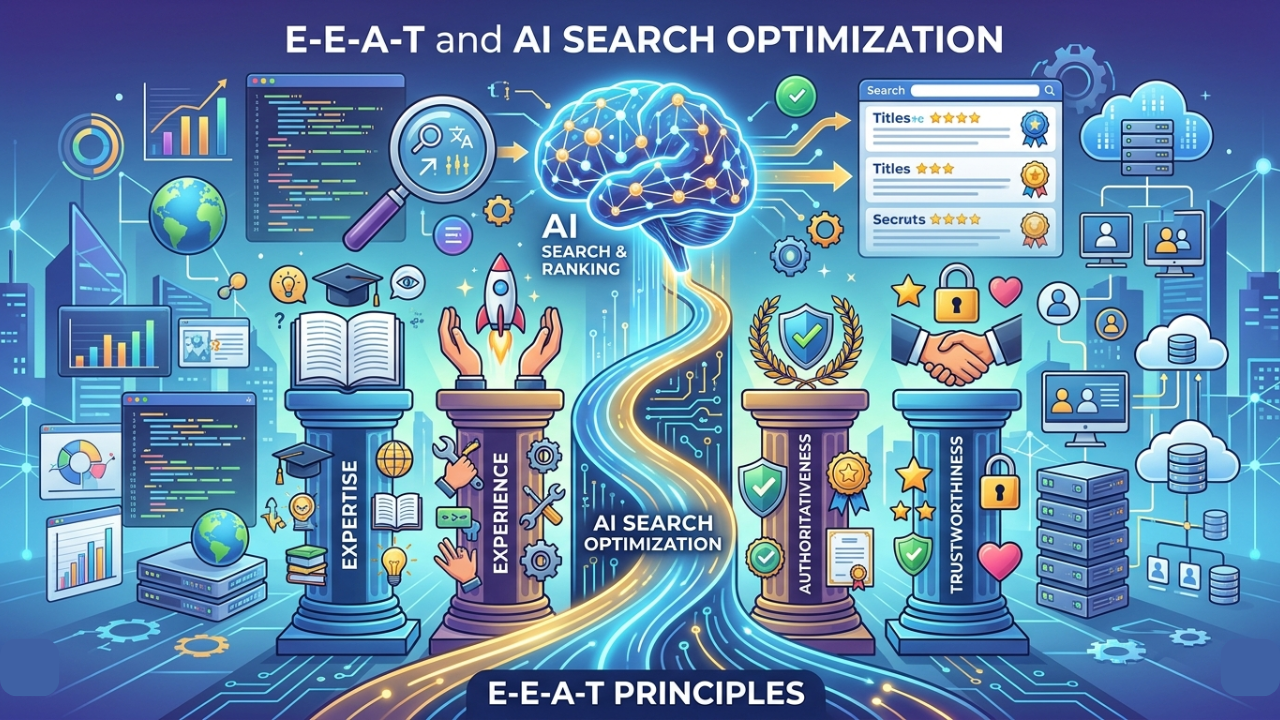
A brand can rank first on Google today and still remain invisible to the user. That’s because search is no longer just about rankings. It’s about which sources AI systems choose to trust when generating answers. AI summaries, conversational search tools, and generative assistants are transforming how information is delivered online. Instead of directing users to a list of websites, search engines increasingly synthesize insights from multiple sources and present them directly within the results. This shift is redefining how brands approach AI search optimization, because visibility now depends not only on relevance but also on credibility.
Businesses that want to remain competitive are investing in strategies that combine strong content with structured authority signals, including comprehensive SEO services and scalable enterprise search strategies. Many organizations are also realizing that visibility challenges often stem from deeper content alignment issues, a problem explored further in AI search optimization and why brand content sometimes fails to generate sustainable growth.
At the center of this transformation lies a framework that has become more important than ever: E-E-A-T Experience, Expertise, Authoritativeness, and Trustworthiness.
What Is AI Search Optimization?
AI search optimization refers to the process of structuring content, authority signals, and brand credibility so search engines and generative AI systems can confidently cite your information when producing answers.
Unlike traditional SEO, which focused primarily on keyword rankings, AI search optimization prioritizes trust signals and authority indicators.
These signals help AI systems determine:
- whether a brand demonstrates real expertise
- whether its information is widely trusted
- whether other authoritative sources reference it
When these signals are strong, search engines and AI systems are far more likely to surface the brand’s content within answers, summaries, and recommendations.
Why E-E-A-T Matters More in the Age of AI Search
Google originally introduced E-E-A-T as part of its search quality guidelines to help determine whether content deserved to rank. Today, the framework plays a much larger role.
Generative search systems must evaluate which sources are credible enough to reference when producing answers. That evaluation relies heavily on E-E-A-T signals such as:
- demonstrated real-world experience
- subject-matter expertise
- authority through citations and mentions
- consistent reputation across the web
In other words, AI search optimization is no longer just about keywords — it is about credibility. Search engines are increasingly functioning as trust evaluators rather than simple ranking systems.
Traditional SEO vs AI Search Optimization
|
Traditional SEO |
AI Search Optimization |
|
Focus on keyword rankings |
Focus on citation in AI answers |
|
Backlinks improve rankings |
Backlinks validate credibility |
|
Content optimized for algorithms |
Content optimized for trust signals |
|
Traffic is the main goal |
Visibility in AI summaries is the goal |
This shift explains why many brands that once ranked well now struggle to appear in generative search results. They optimized for ranking, not trust.
How Enterprise SEO Services Strengthen E-E-A-T Signals
For large organizations, implementing E-E-A-T across an entire website can be challenging. Content may span hundreds or thousands of pages, involve multiple authors, and serve different audiences across the customer journey. This is where enterprise SEO services become essential.
Enterprise SEO frameworks help ensure that every part of a website reinforces the brand’s authority signals.
Key components typically include:
- technical SEO infrastructure that supports discoverability
- structured content architecture that reinforces topic authority
- author attribution frameworks demonstrating expertise
- internal linking systems that strengthen relevance signals
When these elements align, search engines can more easily recognize a brand as a credible entity, strengthening the foundation of AI search optimization.
Why Link Building Still Matters for AI Search
Despite rapid advancements in AI search technology, backlinks remain one of the most powerful credibility signals.
A strong link building strategy demonstrates that other reputable websites trust and reference your content.
These endorsements help search engines evaluate whether a brand’s insights are widely recognized and reliable.
Modern link acquisition focuses on quality rather than quantity. High-value placements within authoritative publications, industry resources, and reputable websites create stronger trust signals than large volumes of low-quality links.
Many organizations therefore rely on professional link building services to secure placements that reinforce authority while supporting long-term search visibility.
Digital PR as a Trust Multiplier
While backlinks remain essential, modern authority building extends beyond traditional link acquisition.
Digital PR services help brands earn recognition through media coverage, expert commentary, and thought leadership placements.
These strategies achieve two critical objectives:
- They strengthen brand authority through visibility in trusted publications
- They generate high-quality backlinks that support a long-term link building strategy
By combining digital PR with SEO, organizations create the external validation that search engines and AI systems rely on when evaluating credibility.
The Continued Importance of Press Release Distribution
Although often overlooked, press release distribution still plays an important role in reinforcing authority signals.
When organizations share announcements or insights through trusted media networks, they create additional reference points that search engines can analyze.
Press releases can:
- expand brand visibility across credible publications
- create new citation signals for AI systems
- strengthen brand reputation within an industry
When integrated with digital PR and link building services, press releases contribute to a broader E-E-A-T strategy.
Content Strategy as the Foundation of Trust
Technical optimization and authority-building strategies are powerful, but they cannot replace strong content.
Content that aligns with E-E-A-T principles typically demonstrates:
- authentic insights based on real experience
- clear explanations supported by credible evidence
- transparency and consistency across topics
- meaningful value for readers
When these qualities are present, content becomes easier for both search engines and AI systems to interpret as trustworthy.
Organizations that combine strong content with scalable enterprise SEO services often achieve the most sustainable growth.
The Future of AI Search Optimization
Generative search experiences are expanding rapidly. Industry research suggests that more than 60% of searches now end without a click, as AI summaries increasingly deliver answers directly within search results.
In this environment, visibility will increasingly depend on authority signals rather than keyword density alone.
Brands that succeed will focus on building layered credibility through:
- expert-driven content strategies
- scalable enterprise SEO services
- a long-term link building strategy
- targeted digital PR services
- strategic press release distribution
Together, these elements strengthen the E-E-A-T signals that influence both traditional search rankings and AI-generated answers.
Frequently Asked Questions
What is E-E-A-T in SEO?
E-E-A-T stands for Experience, Expertise, Authoritativeness, and Trustworthiness. It is a framework used by Google to evaluate whether content comes from credible sources and provides reliable information.
How does E-E-A-T impact AI search optimization?
Generative search engines prioritize trusted sources when producing answers. Strong E-E-A-T signals increase the likelihood that AI systems will cite a brand’s content.
Why is link building important for AI search visibility?
A strong link building strategy demonstrates external trust. When reputable websites reference your content, search engines and AI systems are more likely to treat it as credible.
Final Thoughts
Search engines are evolving from indexing tools into knowledge systems that synthesize information. In this new environment, brands must prove they deserve to be trusted before their content can be surfaced.
By combining strong content foundations with strategic AI search optimization, organizations can build the credibility signals required for modern search visibility.
When supported by a structured link building strategy, professional link building services, and media exposure through digital PR services and press release distribution, those trust signals become powerful drivers of long-term growth. In the era of AI-driven search, the brands that earn trust will ultimately earn visibility.