


Ken Wisnefski, April 7, 2026
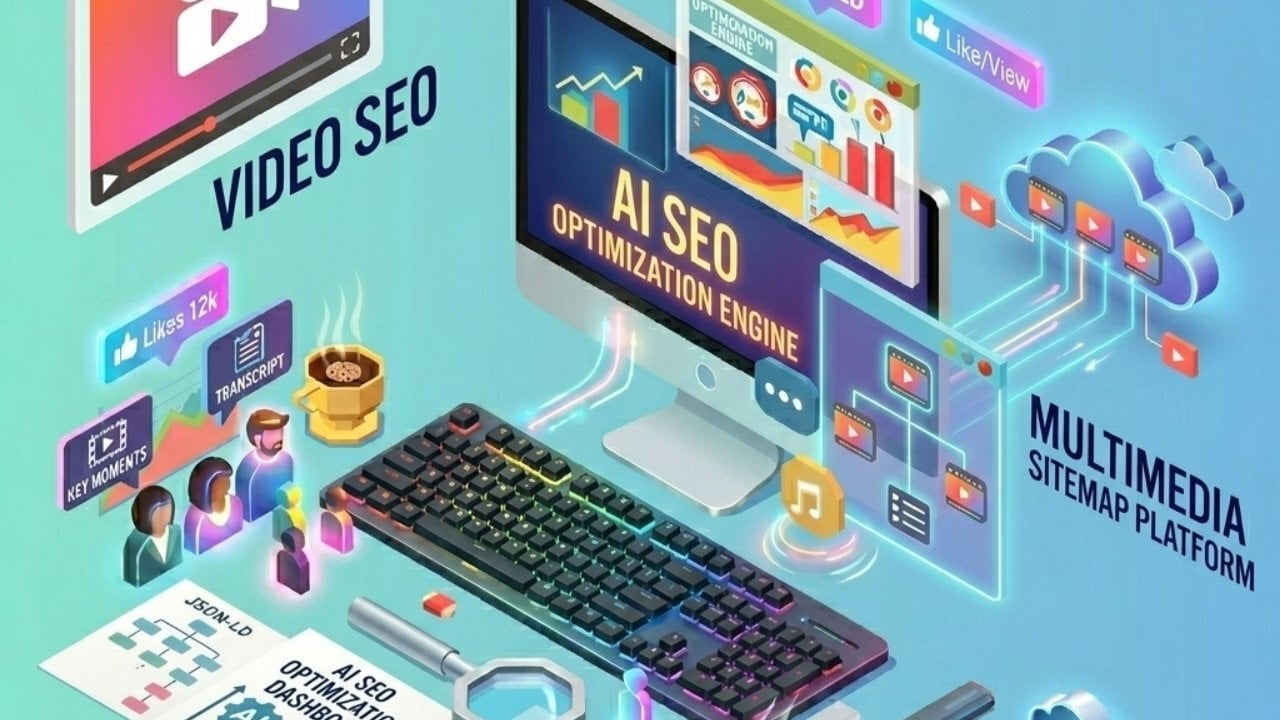
When a user searches today, especially in AI-driven environments, the system is not deciding which page to rank. It is deciding which pieces of information to extract, combine, and present. That information increasingly comes from multiple modalities, including text, video, images, and structured data.
This fundamentally changes the role of multimedia. Video is no longer just a supporting element that improves engagement. It is becoming a primary source of explanation, especially for complex, process-driven, or intent-heavy queries. However, most video content is still invisible at a structural level. It exists visually but lacks the semantic signals required for machines to interpret it.
This creates a disconnect. Content that is highly valuable to users often remains underutilized by search systems. This is where technical SEO services extend beyond traditional optimization. They now include the responsibility of making multimedia content machine-readable, contextually aligned, and extraction ready.
Direct Answer: What Is Video Schema and Multimedia Integration?
Video schema and multimedia integration refer to the process of structuring video and rich media content so that AI systems can interpret, segment, and use that content as part of generated answers.
A modern video SEO strategy is no longer focused solely on ranking videos. It focuses on making video content usable within a broader system of information retrieval and synthesis.
This is achieved through multimedia schema, which provides structured signals about:
- What the video contains
- How it is organized internally
- Where key information appears
- How it relates to surrounding content
Without this layer, video remains an opaque asset. With it, video becomes part of a structured knowledge system that AI can process efficiently.
The Shift from Content Ranking to Content Extraction
The most important change in search is not algorithm updates. It is the shift from ranking documents to extracting information.
In traditional search:
- Pages compete for positions
In AI-driven search:
- Information competes for selection
This creates a new requirement. Content must be easy to extract, not just easy to read. The video introduces complexity here. Unlike text, it does not present information in a linear, immediately accessible format. Systems must rely on additional signals to understand what is being communicated.
This is why structured approaches like Generative Engine Optimization emphasize reducing friction in interpretation. Multimedia schema directly contributes to that goal.
How AI Systems Process Multimedia: A Layered Model
To understand how to optimize video, it is essential to understand how AI systems actually process it. This happens across multiple layers, each adding clarity or introducing uncertainty.
Layer 1: Surface-Level Metadata
This includes:
- Title
- Description
- Tags
These signals provide a high-level understanding but are often insufficient for precise interpretation. They are prone to inconsistency and lack depth.
Layer 2: Textual Conversion Through Transcripts
At this stage, video is translated into text through transcripts and captions. This is one of the most critical steps because it converts multimedia into a format that can be analyzed at scale.
Transcripts allow systems to:
- Identify entities and topics
- Map content to search queries
- Extract relevant segments
Without transcripts, systems rely heavily on guesswork, which increases interpretation cost.
Layer 3: Temporal Segmentation and Key Moments
AI systems do not treat video as a single block. They break it into segments based on relevance.
This allows them to:
- Surface specific answers
- Match precise queries
- Improve user experience
When key moments are defined explicitly through multimedia schema, it reduces ambiguity and improves extraction precision.
Layer 4: Modality Alignment
This is where video is evaluated in relation to other content on the page.
Systems assess:
- Whether the video supports the page topic
- Whether it introduces conflicting signals
- Whether it strengthens or weakens the overall narrative
Strong alignment increases confidence. Weak alignment creates uncertainty.
Layer 5: Cross-Source Validation
Finally, the system compares your video signals with external sources.
It checks:
- Consistency of information
- Alignment with trusted sources
- Repetition of key concepts
This is where broader trust frameworks, like those discussed in brand trust in AI search, come into play. Multimedia must not only be structured, but also consistent with the broader web.
Interpretation Cost: The Hidden Barrier to Visibility
One of the most overlooked concepts in multimedia SEO is interpretation cost. Interpretation cost refers to the effort required for a system to understand and use your content.
Video naturally has a higher interpretation cost than text because:
- It is non-linear
- It requires additional processing
- It depends on supporting signals
Multimedia schema reduces this cost by:
- Providing explicit structure
- Defining key segments
- Clarifying relationships
The lower the interpretation cost, the higher the likelihood of selection.
Where Most Video SEO Strategies Break Down
The problem is not lack of effort. It is a misalignment with how systems work. Most strategies fail because they:
- Focus on hosting platforms rather than site integration
- Ignore schema and structured data
- Skip transcripts or use low-quality ones
- Treat video as engagement, not information
- Fail to align video with page intent
This results in content that is valuable but not usable.
Building a Video SEO Strategy That Actually Works
To align with AI systems, your approach must shift from content creation to content structuring.
Step 1: Integrate Video into Core Page Intent
Video should not be an addition. It should be central to the page’s purpose.
Step 2: Implement Multimedia Schema Fully
Define all relevant attributes so that systems can interpret content without inference.
Step 3: Provide Structured, Accurate Transcripts
Ensure transcripts are complete and aligned with spoken content.
Step 4: Define Key Moments Explicitly
Break videos into meaningful segments that match user intent.
Step 5: Ensure Strong Modality Alignment
Video, text, and structured data must reinforce the same narrative.
How Multimedia Strengthens Technical SEO Services
When multimedia is structured correctly, it enhances your entire technical SEO system.
- Improves clarity of information
- Strengthens entity recognition
- Reduces ambiguity across formats
- Increases selection probability
This is why technical SEO services now extend beyond backend optimization. They are responsible for ensuring that all content formats contribute to a unified, interpretable system.
Key Takeaways
- Video is now a primary input in AI-driven search systems
- Multimedia schema enables precise interpretation and extraction
- A strong video SEO strategy reduces interpretation cost
- Transcripts and segmentation are critical for usability
- Technical SEO services must integrate multimedia at a structural level
Final Thoughts
The future of search is not text versus video. It is how well different formats work together. Video has the ability to explain more effectively than text, but only if it is structured in a way that systems can understand. Otherwise, it remains an untapped asset.
The websites that gain visibility will not be the ones producing the most content. They will be the ones that make their content easiest to interpret across formats. Because in AI-driven search, the question is no longer what you created. It is what the system can confidently use.